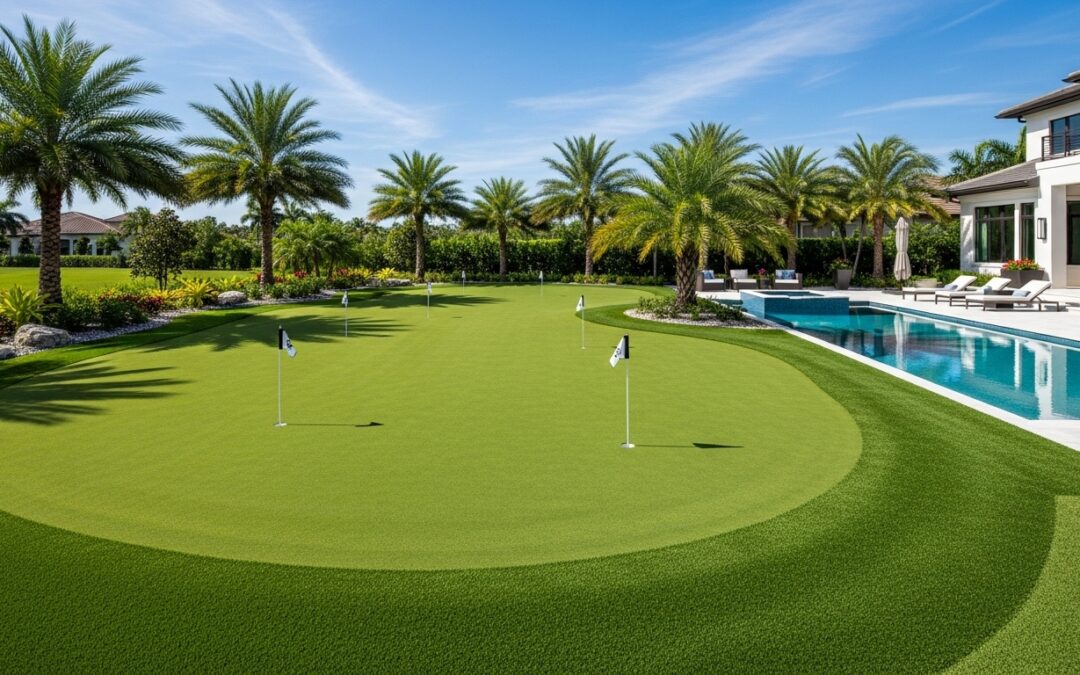
For golf enthusiasts, the idea of stepping out the back door and immediately practicing chip shots, long putts, and tricky breaks is the ultimate luxury. However, before breaking ground, the most common question homeowners ask is regarding the actual backyard putting green cost. Knowing the financial investment required to build a professional-grade, custom synthetic grass golf facility at home allows you to plan effectively and avoid unexpected expenses during the design and installation phases.
At The Artificial Grass Pros, we have designed and constructed custom golf setups for homeowners across Florida, from standard flat practice areas to PGA-caliber multi-tier greens. The reality is that there is no single, flat-rate price for a premium golf installation. The total investment depends entirely on the specific dimensions, the complexity of the design, the quality of the materials used, and the amount of earthwork required to create realistic undulations and proper drainage. This comprehensive guide breaks down exactly what goes into a backyard putting green cost so you know exactly what you are paying for when you hire a professional team.
The Baseline: Average Backyard Putting Green Cost per Square Foot
Before diving into the granular details of sub-bases and fringe materials, it is helpful to establish a baseline expectation. For a custom, professionally installed synthetic artificial grass putting green, homeowners typically see prices ranging from $15.00 to $30.00+ per square foot.
If you are building a standard 500-square-foot practice area, your total backyard putting green cost will likely range between $7,500 and $15,000. Why is there such a massive gap between the low end and the high end of that spectrum? The final price is dictated by a series of variables, including the amount of soil excavation needed, the addition of custom features like sand traps or chipping pads, and the accessibility of your yard for heavy machinery.
It is highly important to recognize the difference between a cheap, rolled-out “carpet” green purchased online and a permanently engineered architectural feature. A true putting green requires a heavily compacted crushed aggregate base, precisely graded slopes to mimic a real golf course, and high-density turf that holds a golf ball exactly like natural bentgrass.
Factor 1: The Total Size and Scale of the Project
The most significant variable driving your backyard putting green cost is the total square footage of the project. However, the pricing model operates on the principle of economies of scale.
The “Economies of Scale” Rule
Counterintuitively, smaller putting greens actually cost more per square foot than massive, sprawling installations. If you want a tiny 200-square-foot green tucked into a corner of your patio, the price per square foot might hover near the $25 to $30 mark. If you are building a massive 2,000-square-foot short-game complex spanning your entire property, the price per square foot drops significantly, often closer to the $15 to $18 range.
This happens because the fixed overhead costs of an installation remain the same regardless of the size. The cost to mobilize a professional installation crew, transport the heavy vibratory plate compactors, deliver the crushed concrete base materials, and haul away the excavated topsoil must be factored into every job. On a larger project, these fixed costs are distributed over a much wider area, driving the average price per square foot down.
Factor 2: Site Accessibility and Heavy Machinery
Another critical factor that influences your backyard putting green cost is how easily our crews can access the installation site. Building a proper golf green requires moving thousands of pounds of material. We must excavate and remove the existing dirt, grass, and root systems, and then bring in tons of crushed aggregate sub-base and heavy rolls of synthetic turf.
- High Accessibility: If your backyard has a wide double-gate, allowing us to drive skid steers, motorized wheelbarrows, and dump trailers directly onto the site, the labor time is drastically reduced. This efficiency keeps your installation costs strictly optimized.
- Low Accessibility: If you live in a dense neighborhood with narrow side yards, or if your property is fenced tightly with a standard 3-foot gate, our crews cannot use heavy machinery. Every single cubic yard of dirt must be manually wheeled out in standard wheelbarrows, and every ton of crushed stone must be manually wheeled in. This adds days of intensive physical labor to the project timeline, which directly increases the final price tag.
Factor 3: Base Preparation and Earthwork (The Hidden Investment)
The secret to a perfect putt does not lie in the grass itself; it lies entirely in the foundation underneath it. You can purchase the most expensive, tour-quality synthetic turf in the world, but if it is installed over a poorly compacted, uneven base, the ball will wobble, skip, and break unpredictably.
The Engineering of the Sub-Base
Proper base preparation accounts for a significant portion of the total backyard putting green cost. First, the installation crew must excavate the native soil to a depth of roughly 3 to 4 inches. Once the organic material is removed, a weed barrier is laid down.
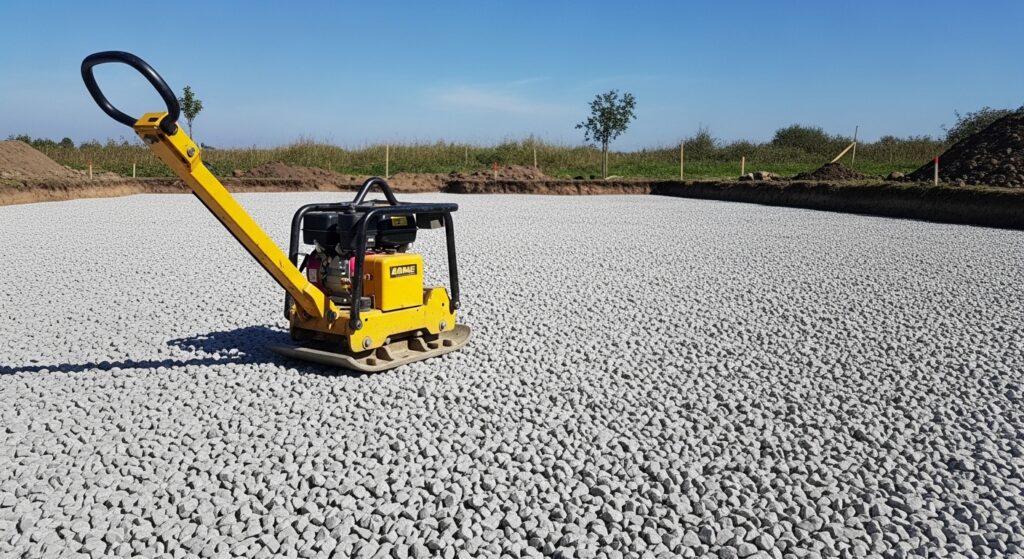
Next comes the most crucial step: importing the base material. Professional installers use a specific blend of crushed aggregate (often crushed concrete or limestone) that packs down incredibly tight. This material is meticulously graded using laser levels and then compacted using heavy vibratory plate machines.
Creating Undulations and Slopes
If you want a flat, miniature-golf style surface, the grading process is relatively fast. However, serious golfers usually request custom undulations, tiers, and specific breaking putts to challenge their game. Sculpting the crushed aggregate to create these subtle, realistic contours requires highly specialized skill and additional labor time. Designing a complex green that mimics the breaks of a professional course will inherently increase the overall investment compared to pouring a flat pad. For instance, creating a luxury short-game complex like a custom backyard putting green in West Palm Beach often involves heavy contouring to match the high-end aesthetic of the local golf clubs.
Factor 4: Premium Turf Selection and Stimp Speeds
Not all artificial grass is created equal, especially when it comes to golf. Standard landscape turf is designed to be soft and fluffy for pets and kids. Putting green turf is a completely different engineered product. It is densely woven, highly texturized, and designed to roll true.
There are generally two distinct types of putting turf available, and your choice will impact the final cost:
- Slit-Film Polypropylene: This is the most common and versatile option. It requires a heavy infill of specialized silica sand to stand the blades up and control the speed of the ball. Polypropylene greens are highly customizable; the installation crew can adjust the amount of sand and roll the green with heavy water-filled rollers to dial in your preferred “Stimp speed” (how fast the ball rolls).
- Texturized Nylon: Nylon is a much stiffer, highly resilient material. It often requires little to no sand infill because the fibers are incredibly dense and curly, naturally creating a smooth, fast surface. Nylon is incredibly durable and holds its shape perfectly over time, but it is also the most expensive material to manufacture, making it a premium upgrade that will increase the total price.
Factor 5: The “Fringe” and Landscape Blending
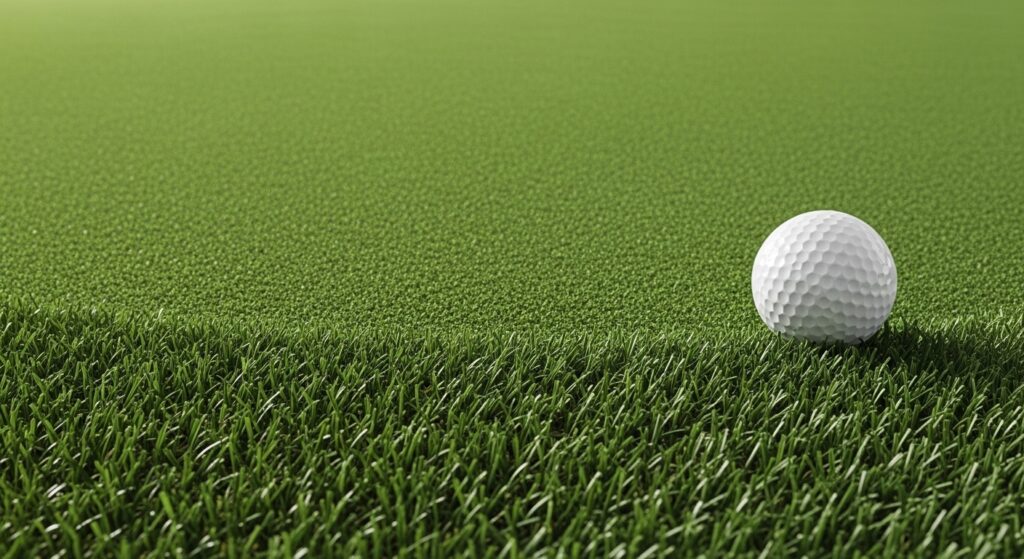
When you envision a beautiful golf hole, it is rarely just a flat patch of short grass surrounded by dirt or a concrete patio. The visual aesthetic that separates a cheap, amateur installation from a luxury country club design is the “fringe.” This is the longer, thicker, contrasting border of turf that frames the putting surface, holds the golf balls in play, and allows you to practice challenging chip shots from off the green.
The inclusion of this border is a massive driver of the final backyard putting green cost.
- Aesthetic Framing: Installing a fringe requires the crew to meticulously cut and seam two entirely different types of turf together (the short putting surface and the taller, often bi-colored landscape grass) along complex, curving lines. This exact, specialized cutting requires highly experienced installers and significantly more time.
- Material Increase: You are purchasing two different products. The fringe requires a premium landscape turf, often a 60-ounce to 80-ounce product that looks exactly like thick, manicured St. Augustine or Bermuda grass.
- Chipping Pads: Many serious golfers request specific “tee boxes” or dedicated chipping zones placed 10, 20, or even 40 yards away from the green (if space allows). This requires additional excavation, base prep, and turf installation, adding to the overall footprint of the project. A large, sprawling complex that seamlessly blends a multi-hole green with artificial grass for playground areas for the kids or a pet turf zone for the family dog creates a stunning backyard oasis, but the cost naturally scales with the size and complexity of the design.
Factor 6: Custom Features, Cups, and Hazards
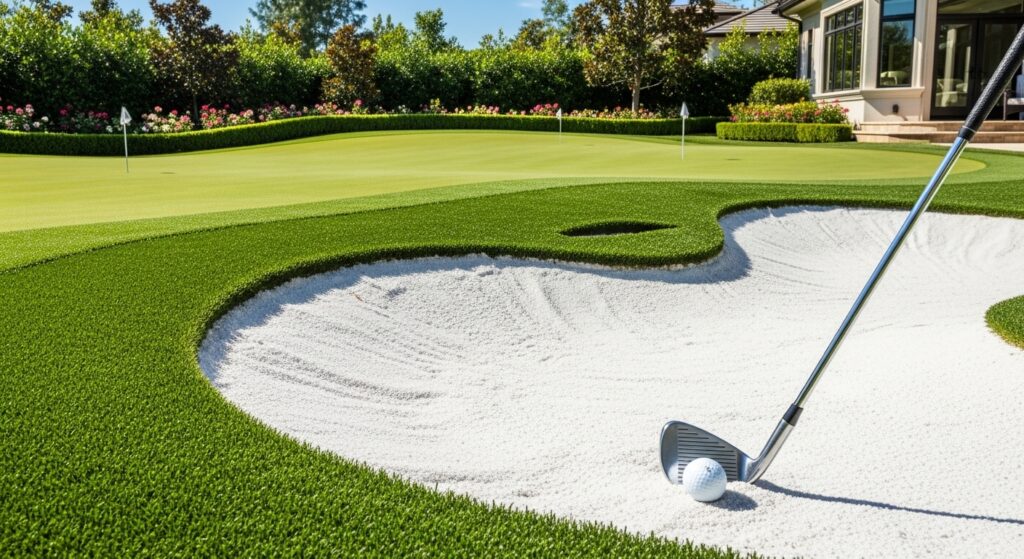
A putting green is a canvas, and you can customize it as heavily as you want. However, every bell and whistle you add will increment your total backyard putting green cost.
Number of Holes and Cups
A standard practice green usually features 3 to 4 regulation-sized cups, complete with professional flags. The cost of drilling the base, setting the aluminum or plastic cups perfectly flush, and cutting the turf cleanly around them adds a minor bump in labor and material costs. If you want a massive 9-hole layout spanning your entire property, the price will reflect the extra hardware and precise installation time.
Bunkers and Sand Traps
For the ultimate practice facility, nothing beats a real sand trap to practice those impossible blast shots.
- Excavation and Drainage: Building a bunker is not as simple as digging a hole and dumping sand in it. A proper trap requires deep excavation, specialized drainage piping to prevent it from becoming a muddy pond during heavy Florida rainstorms, and a durable liner.
- Specialty Sand: The bright white silica sand used in professional bunkers is expensive to source and transport. Adding a single, small sand trap can easily add $1,000 to $2,500 to the total backyard putting green cost, depending on the size, depth, and the complexity of the drainage system required.
Integrated Lighting and Technology
To maximize the usability of your new investment, many homeowners opt to install low-voltage landscape lighting around the fringe or even small, recessed LED lights directly inside the cups. Running the electrical conduit under the aggregate base before the turf is laid down is a brilliant move, but it requires coordination with an electrician and adds to the initial quote.
Factor 7: Long-Term Maintenance and ROI (The “Hidden Savings”)
When evaluating the upfront backyard putting green cost, it is absolutely critical to factor in the long-term savings. While dropping $10,000 on a synthetic installation might feel steep initially, the alternative—trying to maintain a real bentgrass or bermuda golf green in a residential Florida backyard—is a financial and logistical nightmare.
The Impossible Cost of Real Golf Turf
To keep real grass cut to the fractional heights required for a fast, true roll, you cannot use a standard rotary lawnmower. You must purchase a specialized reel mower (which often costs $2,000 to $5,000 alone) and mow the green daily, sometimes twice a day during the peak growing season.
- Water Bills: Real golf greens require massive amounts of water to survive the brutally hot summer sun.
- Chemicals and Fertilizers: You must constantly apply precise mixtures of expensive fertilizers, fungicides, and pesticides to prevent the delicate grass from dying of disease, mold, or insect infestations.
- Time: The sheer number of hours required to roll, cut, top-dress, and water a real green is staggering. It becomes a stressful part-time job rather than a relaxing hobby.
The Synthetic Advantage
By choosing artificial turf, the maintenance cost effectively drops to zero. You eliminate the water bill, the chemical fertilizers, the expensive mowers, and the weekend labor. A quick use of a leaf blower to clear off debris and an occasional brushing with a stiff push-broom to redistribute the infill sand is all that is required.
Over a 10-year lifespan, the initial backyard putting green cost easily pays for itself simply in the money saved on water, chemicals, equipment, and lawn care services. Furthermore, a high-end, professionally installed putting green significantly boosts the curb appeal and resale value of your property, particularly in golf-heavy real estate markets like Naples or Orlando.
Frequently Asked Questions (FAQ) About Putting Green Installations
Is an artificial putting green worth the money? For avid golfers, absolutely. The ability to practice your short game 365 days a year without driving to the club, paying range fees, or dealing with crowded practice areas is invaluable. It is a one-time investment that drastically improves your handicap while completely eliminating the nightmare of maintaining real, ultra-short grass in a harsh climate.
How long does a synthetic putting green last? When properly installed over a heavily compacted crushed aggregate base by a professional team, a premium synthetic putting green can easily last 15 to 20 years. The high-density nylon or polypropylene fibers are UV-stabilized to prevent fading in the sun and are engineered to withstand millions of footfalls and golf ball impacts without breaking down.
Does an artificial putting green drain when it rains? Yes, exceptionally well. During the installation process, professional crews create a slight, imperceptible grade to direct water flow, and the synthetic turf backing is highly perforated. The water passes straight through the turf and percolates into the crushed stone base below, meaning you can resume putting almost immediately after a heavy afternoon thunderstorm without dealing with mud or puddles.
Can I install a putting green on top of concrete? Yes, it is possible to glue synthetic putting turf directly to a concrete slab (like a large patio). This drastically lowers the backyard putting green cost because it eliminates the expensive excavation, base material, and compaction labor. However, the surface will be perfectly flat, meaning you cannot create custom breaks or undulations, and the roll will be extremely fast and hard.
The Final Verdict: Budgeting for Your Dream Backyard
The reality of the backyard putting green cost is that you get exactly what you pay for. If you attempt a cheap DIY project or hire an inexperienced landscaper who simply rolls a piece of carpet over some loose dirt, the surface will be lumpy, the ball will bounce erratically, and the seams will eventually split.
If you want a practice facility that genuinely mimics the speed, the breaks, and the aesthetic beauty of your favorite local country club, you must invest in professional engineering. The excavation, the crushed base, the custom grading, and the precision seaming of the fringe are what create a true golfer’s paradise.
Ready to start designing your custom short-game complex? Do not let another beautiful weekend pass by without practicing your chip shots at home. Contact the experts at The Artificial Grass Pros today via our Contact Us page to schedule a free, no-obligation site evaluation. We will assess your yard, discuss your desired Stimp speeds and custom features, and provide a transparent, detailed quote to bring your dream golf setup to life.
Recent Comments